BiHub: Why Democratic Republic of the Congo?
Country Profile
Get started by familiarising yourself with a basic country profile.
AUS & DRC
Delve into the bilateral trade relationship, and see how it could assist you.
Doing Business in DRC
Finish your research by understanding local practicalities here.
ABOUT DEMOCRATIC REPUBLIC OF THE CONGO :
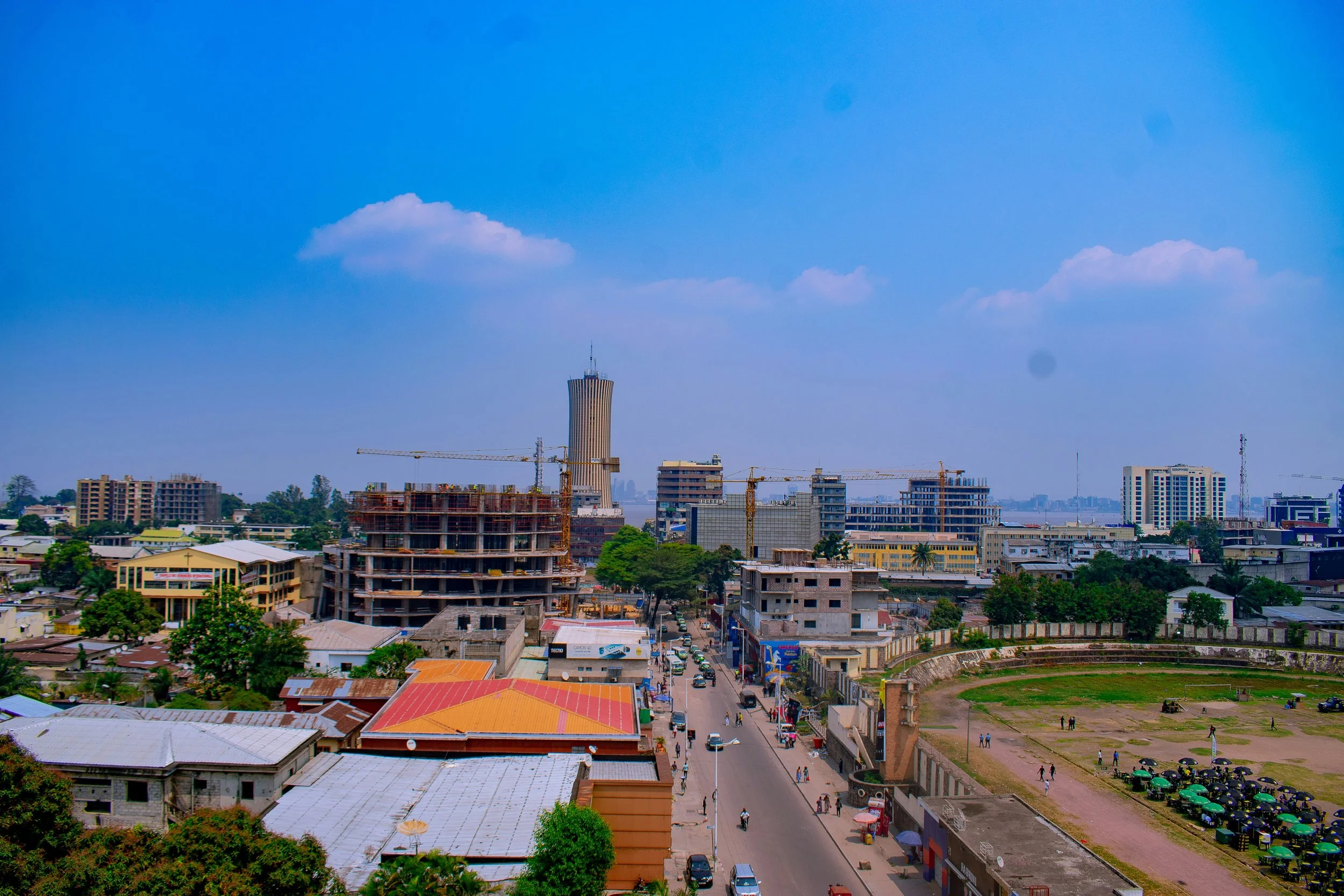
The Democratic Republic of the Congo is Africa's largest country by land area and one of the continent's most resource-rich nations. Its vast mineral wealth — including the world's largest reserves of cobalt and significant copper, gold and lithium deposits — alongside a large and growing population, extensive arable land and substantial hydropower potential, make the DRC an increasingly important market for Australian businesses and investors. While mining remains the backbone of the economy, particularly copper and cobalt production, the DRC is expanding opportunities across sectors including agriculture, energy and infrastructure, construction, telecommunications and financial services.
Capital: Kinshasa
Currency: Congolese franc (CDF)
Population: 112.8 million (2025 est.)
Population Growth: 3.2% (2024/2025 est.)
Language: French (official); Lingala, Kikongo, Swahili and Tshiluba are widely spoken as regional lingua francas, alongside over 200 additional ethnic languages spoken across the country.
Government Type: Semi-Presidential Republic
A Resource Powerhouse with Untapped Economic Potential:
The Democratic Republic of the Congo (DRC) occupies a distinctive position in Africa’s economic landscape. Covering approximately 2.3 million square kilometres, it is the second-largest country in Africa by area and has one of the continent’s largest populations. Its geographical scale, natural resources and position at the intersection of Central, Eastern and Southern Africa give the country considerable economic significance.
Much of the international attention surrounding the DRC has been driven by its extraordinary mineral wealth. The country is one of the world’s leading producers of copper and the dominant source of mined cobalt, a critical mineral used in batteries, electric vehicles and other technologies associated with the global energy transition. These resources have placed the DRC at the centre of global efforts to secure critical-mineral supply chains.
Yet the country’s economic potential extends considerably beyond mining. The DRC possesses substantial hydropower potential, extensive arable land, significant forests and biodiversity, and a large domestic market. Its geographical position also provides opportunities for greater regional trade and economic integration.
The central challenge is therefore not a lack of resources, but how to transform those resources into broader and more inclusive economic development.
Turning Resource Wealth into Broader Growth:
The DRC has experienced strong economic expansion in recent years, although much of this growth remains concentrated in the extractive sector. Real GDP growth was estimated at 5.5 per cent in 2025, supported primarily by mining, particularly strong copper production and exports. Non-mining sectors also expanded, with construction and services contributing to economic activity. The International Monetary Fund expects continued growth in 2026, supported by mining alongside agriculture, construction and services.
The importance of mining to the economy is clear, but its dominance also highlights the need for diversification. Mining is capital-intensive and has not generated employment on a scale proportionate to the size of the population. Despite relatively strong economic growth, poverty remains widespread, demonstrating that growth in the extractive sector alone cannot address the country’s broader development needs.
Agriculture represents one of the most significant opportunities for diversification. Despite extensive arable land and favourable climatic conditions, agricultural productivity remains relatively low. Investment in farming, irrigation, mechanisation, storage, logistics and food processing could strengthen domestic food security while creating employment and reducing dependence on imported agricultural products.
Greater domestic value creation could also allow the DRC to capture more economic benefits from its mineral wealth. Developing processing and supporting industries would create opportunities in engineering, manufacturing, transport, environmental services and other sectors connected to mining. The objective is therefore not to move away from mining, but to use the sector as a foundation for a more diversified economy.
Where Investment Meets Development Needs:
The scale of the DRC’s development needs creates opportunities across a range of industries. Mining remains the most prominent, particularly in copper and cobalt, but the country’s longer-term investment potential increasingly lies in sectors that can support diversification and improve economic connectivity.
The government has increasingly sought greater control over the management and export of strategic minerals. In 2025, it temporarily suspended cobalt exports before introducing a quota system. In August 2026, the government announced an immediate ban on exports of copper and cobalt concentrates, with limited scope for strategic exemptions, as part of efforts to encourage domestic processing and retain more value within the country. These developments demonstrate both the strategic importance of the mining sector and the importance of closely monitoring the regulatory environment.
Greater emphasis on domestic processing could create opportunities in mineral refining, mining services, geological exploration, engineering and infrastructure supporting the extractive sector.
Energy represents another critical area. Limited electricity access remains a major constraint on economic development, while the DRC possesses enormous hydropower potential. The proposed development of the Inga 3 hydropower project could expand electricity generation and support wider industrial development. Improved energy access would benefit mining, manufacturing, agriculture, telecommunications and small businesses alike.
Infrastructure also remains a major area of potential investment. Roads, railways, ports and telecommunications networks are essential to connecting production centres with domestic and regional markets. Investment in these areas could reduce logistical costs while strengthening the country's participation in regional value chains.
For international businesses, these development needs create opportunities beyond resource extraction. Agriculture, agribusiness, energy, infrastructure, telecommunications, construction, financial services and professional services all have potential as the DRC seeks to broaden its economic base.
A Country Increasingly Connected to Its Region:
The DRC’s geographical position makes regional integration particularly important. The country is a member of the Southern African Development Community (SADC) and the East African Community (EAC), while its participation in the African Continental Free Trade Area (AfCFTA) provides a broader framework for continental trade integration.
For a country of the DRC’s size, regional markets can help overcome some of the logistical challenges associated with reaching distant international markets. Greater regional integration could support the development of cross-border value chains, expand market access and encourage greater diversification of exports.
The DRC’s growing importance in global critical-mineral supply chains adds another dimension to its international economic position. Demand for copper and cobalt is expected to remain closely linked to the global energy transition, ensuring continued international interest in the country.
For Australian businesses, this evolving landscape presents potential areas of engagement. Australia’s experience in mining services, geological exploration, engineering, infrastructure, agriculture and professional services could complement several of the DRC’s development priorities.
However, engagement with the DRC requires a long-term perspective. Security conditions remain particularly challenging in parts of the east, while infrastructure limitations, regulatory complexity and changing policies in strategically important sectors can increase operational risks. Businesses therefore need to understand the local environment and establish appropriate strategies for managing these challenges.
From Mineral Giant to Diversified Economy:
The Democratic Republic of the Congo stands at an important point in its economic development. Its copper and cobalt resources have already made it indispensable to global mineral supply chains, while its agricultural potential, energy resources, large population and regional position provide foundations for a much broader economic future.
The opportunity lies in connecting these different sources of potential. Mining can generate export revenues and international investment, while agriculture can create employment and strengthen food security. Energy and infrastructure can enable industrial development, while digital and professional services can support the emergence of a more diversified private sector.
Regional integration will also remain important. Through SADC, the EAC and AfCFTA, the DRC has opportunities to deepen commercial connections across Africa and participate more extensively in regional value chains.
For international businesses and institutions, including those from Australia, the DRC represents a market that requires both patience and a long-term perspective. The opportunities are significant, but successful engagement will depend on understanding the country's regulatory, infrastructure and security environment and identifying areas where international expertise can contribute to local development priorities.
The DRC’s economic future will ultimately depend on whether its extraordinary natural wealth can become a foundation for broader economic opportunity. Its minerals have already established its importance to the global economy. The next stage of its transformation will be determined by its ability to use that position to develop industries, infrastructure, skills and businesses capable of generating more inclusive and sustainable growth.
For businesses prepared to take a long-term approach, the DRC is therefore more than a major source of critical minerals. It is an emerging economic market whose greatest potential may lie in what can be built around its resources
Embassy Contact Details:
AUSTRALIAN DIPLOMATIC REPRESENTATION TO DRC
(Resident in Harare, Zimbabwe — non-resident accreditation to DRC)
Telephone: +263 861 200 2100
Email: zimbabwe.embassy@dfat.gov.au
What Lies Ahead Beyond the Democratic Republic of the Congo’s Mineral Wealth - Titan Alramadhan